Hello my Indigo Brothers and Sisters,
What is an Indigo child or Adult? Indigos
are strongly independent, have a sense of purpose and direction, and
have trouble understanding why others around them do not see the world
as they do. As children they approach the world differently and they
expect to be treated as the enlighten beings they are. This can be
very challenging to say the least.
Indigos have had many names. Star Children, Children of OZ, Aquarian Children, Crystal Children and Psychics etc.
How did the term Indigo come about? Called by many names like Children of Oz, Solar Children, Crystal Children, Aquarian Children, etc. The name Indigo came about during the later part of the Seventies, a woman called Nancy
Ann Tappe, an auric seer, noticed a change taking place in the color of Children’s auras. As part of
her research and study she published a book in 1982 called Understanding Your Life Through Color. In
that, is where the first mention of indigo children is talked about.
How long have there been Indigos? Well Indigos have been around for a long time. Many great healers, seers, and prophets in history are and were Indigos.
I am Indigo and Beyond. My name is Francisco Alvarez and I am a Curandero (Traditional Mezo-American Healer/Shaman). I come from Indigo
parents and a long line of Indigo ancestors both paternal and maternal. It was
foretold I would arrive an awakened Indigo child by my great grandmother
before she transitioned into the next existence. I was lucky to have the
understanding of who I was and what my unique qualities would be and at a young
age I was taught and my gifts were nurtured.
Are you an Indigo or do you have an Indigo child? Many Indigos have not been so
lucky as I was and have had to struggle with their gifts alone. No matter what time in your
life your Indigo side wakes up it can still be hard to deal with the feeling of
being lost, not having a direction and not knowing how to handle all the
information and feelings pouring in all at once. Being born an Indigo in a lineage of Indigos and
being taught as a classic Curandero I am here to guide you on this path and your awaking. I have the Indigo vision and beyond, and the knowledge of what you are experiencing and will experience on this journey to full awareness. There is no need to walk alone, we are here and have been here waiting for this day.
Showing posts with label #Inspirational. Show all posts
Showing posts with label #Inspirational. Show all posts
Sunday, February 3, 2013
Wednesday, December 26, 2012
I am - Yo Soy

Finish the following phrase: I am
Al entrar en el año nuevo que tres palabras describe a sí mismo para el año 2013:
Termina la frase siguiente: Yo soy
Friday, December 21, 2012
December 21, 2012 End Of The Fifith Sun

This is the darkest day of the year but in order to see light we must know the absence of it. This turn from dark to light will be not only in a solar sense but in an awaking sense as we the indigo people use our collective energies and talents to push the evolution at amazing speed instead of watching we will actively create it.
Be the change you want to see with out compromise or excuses to anyone who can not see out of the darkness. This is not the time to hide your light but to expose it to the world and use it as a beacon to the universe we are ready for the next step and the next encounter.
Thursday, October 25, 2012
Cuando el cambio llega

Como yo si usted era un cuidador, complaciente o co-dependiente y cuando usted liberarse de aquellos que dependen de usted para usar toda su energía para su drama, que puede poner en duda su lealtad e incluso dicen que ha cambiado para peor.
No hay nada malo en encontrar nuestro equilibrio y tomar decisiones saludables para sí mismo y no esperar que otros les entienden porque no uste.
Tus verdaderos amigos te celebramos como un espíritu en evolución. usted está tomando el cuidado de sí mismo ya sus seres queridos con respecto a sus opciones. Otros por necesidades egoístas quieren teiner el control de que tenían antes.
No hemos venido aquí para ser subyugados por otros amigos o no. Hemos venido aquí para crecer y evolucionar para el próximo viaje. Encuentra tu pie en tierra buena y avanzar en su viaje. No esperes a vivir su vida ... Francisco
Tuesday, October 23, 2012
Recuerda como te ves te convertirás

Pero si usted toma un momento y revisar otras ocasiones se habían presentado a estos obstáculos se darán cuenta de que han pasado eventos aún más difíciles en su vida y han hecho este punto.
Algunos de nosotros hemos pasado por el infierno en la tierra y todavía están aquí respirando todavía sigue avanzando. Recuerdo que lo que ha roto muchos sólo ha hecho que yo viva mejor y hacer más por mí mismo y de mi comunidad.
Recuerda como te ves te convertirás. Mira con ojos amorosos ... Francisco
Tuesday, October 2, 2012


Tuesday, September 25, 2012
UNM Curanderismo Program Back for 12th Year - UNM Today | The University of New Mexico
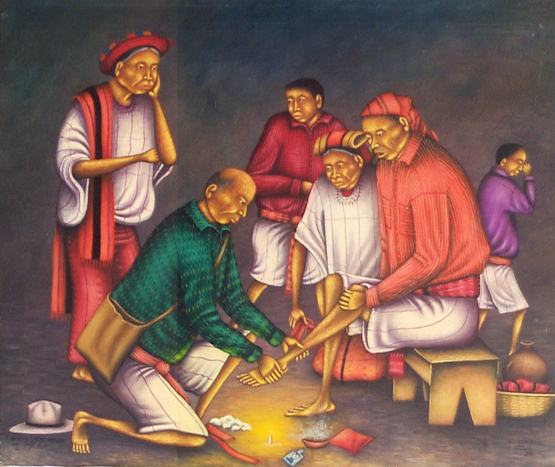
The popular summer course, “Traditional Medicine without Borders: Curanderismo in the Southwest and Mexico,” takes place at the University of New Mexico from July 16–27. Dr. Eliseo “Cheo” Torres, UNM vice president for Student Affairs and professor of Language, Literacy, and Sociocultural Studies hosts the course in conjunction with the UNM Women’s Resource Center.
This summer class, now in its 12th year, is an opportunity for Mexican traditional healers to share knowledge about curanderismo, the art and science of Mexican folk healing, with students and members of the public.
Torres takes an integrative approach to medicine and his class features demonstrations incorporating curanderismo with various traditional and holistic health techniques. The course uses healers and health practitioners from UNM, Mexico and the Albuquerque community as instructors.
“Each year the class has grown in popularity. We consistently have more than 100 students and this year, I’m again expecting local, national and international students,” Torres said. “Unique about this class is that local curanderos — practitioners and healers — all come together to share and learn about traditional healing methods. The first week local curanderos will be involved, while both Mexican curanderos and local curanderos will take part in week two,” he added.
In conjunction with the class, the UNM Women’s Resource Center and the National Hispanic Cultural Center sponsor and host two Mexican Traditional health fairs (Ferias de Salud) and free workshops; as well as a performance, “Santa de Cabora” about “Teresita,” a legendary curandera.
The health fairs and workshops are set for Tuesday, July 24 from noon to 4 p.m. on the UNM campus; and on Thursday, July 26 from 4 to 9 p.m. at the National Hispanic Cultural Center. The fairs feature more than 30 well-known Mexican folk healers/curanderos(as) from the México City area, including the communities of Cuernavaca, Tepoztlán, Amatlán and Oaxaca.
“The healers will discuss traditional healing therapies including herbal medications, spiritual energy cleansings and other healing techniques, which have remained a part of the Mexican culture for centuries. Treatments will be available and donations accepted,” Torres said.
Elena Diaz Bjorkquist performs “Santa de Cabora” on Thursday, July 19 at 7 p.m. at the National Hispanic Cultural Center in the Roy E. Disney Room. Bjorkquist is a writer, historian and artist from Tucson who authored two books, “Suffer Smoke,” and “Water from the Moon.” Opening performances that night include the music of Elena Klaver, a singer-songwriter whose songs reflect her work for peace, justice and environmental issues; as well as a “healing through laughter” demonstration by renowned curanderas, Rita Navarrete Perez and Tonita Gonzales. A $10 suggested donation will benefit the UNM Women’s Resource Center and the curanderismo class.
For more information on the course, including registration, syllabus, health fairs and workshops, visit Curanderismo, or follow on Facebook.
Media Contact: Carolyn Gonzales (505) 277‑5920; email: cgonzal@unm.edu
Monday, September 24, 2012
Interview with David Gonzalez Founder of Spiritual-U
Wednesday, September 19, 2012
Manifesting Abundance

When you let go and let the universe assist you things happen. Let me share one of these events that took place for me. I remember some years ago I had just bought my ranch and made my first mortgage payment. I was between paychecks and my car decided to have a major issue for at time which was going to coast $200 to fix. As I got the news at work I sat at my desk wondering how I would swing this before the next paycheck then I decided to do something I had just started to practice. I asked the universe to take care of it and make it work out and gave up my worry.
At lunch I decided to go to the library’s weekly books sale and of course being a new home owner I was looking for anything related to owning a home. I found a gardening book that retails for $20 new and it was the current years edition for only $2. I didn’t really look at until I got home and as I was thumbing through the pages half way through the book three crisp $100 dollar bills came falling out into my lap. I just smiled said thank you out loud the universe had solved my problem just by asking. -Francisco-
Tuesday, September 18, 2012
Aztec Calendar 9-18-12
Ze (1)
represents all and nothing, the first, unity
Miquiztli (Death) represents transformation, rest, reflection, letting go of the old, rebirth. It develops night’s energy into next day’s light, just like the renaissance after death
Miquiztli (Death) represents transformation, rest, reflection, letting go of the old, rebirth. It develops night’s energy into next day’s light, just like the renaissance after death
Monday, September 17, 2012
Make Friends with Angels
Make friends with the angels, who though invisible
are always with you. Often invoke them, constantly praise them, and make
good use of their help and assistance in all your temporal and
spiritual affairs.
Saint Francis de Sales
Nothing is so strong as gentleness, nothing so gentle as real strength.
Saint Francis de Sales
Saint Francis de Sales
Nothing is so strong as gentleness, nothing so gentle as real strength.
Saint Francis de Sales
Sunday, September 16, 2012

Saturday, September 15, 2012

Wednesday, September 12, 2012
Fresno's Shenzen Japense Friendship Garden Seeks Help 09-12-12

Shinzen help sought
Supporters of the Shinzen Japanese Garden in Fresno's Woodward Park are seeking the public's help to maintain the garden and raise funds for its upkeep.
Volunteers are asked to show up Saturday from 8 a.m. to noon to help weed, rake, dig, plant, sweep and water the garden. There is no city staff dedicated to maintaining the garden because of budget cuts.
For more information, contact Richard Kassabian at (559) 434-8880 or (559) 259-7404.
Also, the nonprofit Shinzen Garden Society will hold a fundraiser Saturday, Sept. 29 called "Moonlight in the Garden."
The event will run from 4:30 to 8:30 p.m. and include dinner, musical entertainment and a silent auction in the garden.
Information is available at www.shinzenjapanesegarden.org or by calling Tom Skelton at (559) 840-1264 or (559) 227-8940.
Read more here: http://www.fresnobee.com/2012/09/11/2988331/local-briefs-man-hurt-in-squaw.html#storylink=cpy
Friday, September 7, 2012

Sunday, September 2, 2012
Saturday, September 1, 2012
Aztec Schooling: Calmecac and Telpochcalli by Curanderismo, The Healing Art of Mexico 9-1-2012

Shared from a post by Curanderismo, the Healing Art of Mexico on FaceBook
Aztec Schooling: Calmecac and Telpochcalli
In honor of back to school season in my part of the world, I’d like to share some notes on Aztec education, as well as a link to an article on the rediscovery and initial excavation of the calmecac in modern-day Mexico City. In case you’re not familiar with the calmecac, it’s one of two schooling institutions created by the Aztecs to educate their children. Dibble and Anderson translate the name “Priests’ House” or “House of Penance,” for reasons that will become clear below. The telpochcalli, or “Young Men’s House,” could be described roughly as a cross between a military and trade school, in Western/European terms. It’s the school primarily populated by the non-aristocratic children, where they would be trained in combat and economic matters more typical of their station.
In contrast, the calmecac is more akin to a seminary, elite prep school, and college rolled together. Primarily attended by the offspring of the noble class, it’s reported that certain common-born children of especial talent were allowed to go as well, despite their lineage. Here the children would learn basic priestly training, military skills, the arts, etiquette, and leadership. While we have records of these two schools existing within the walls of Tenochtitlan, it wasn’t until 2007 that archaeologists had uncovered the remains of any part of these two educational complexes. If you would like to read an article in the Christian Science Monitor reporting on this discovery, please click HERE. (It includes a photograph of one of the ornaments that once decorated the roof of this indigenous American university — the cross section of a twisting shell, named the “wind jewel,” a symbol of Quetzalcoatl the Plumed Serpent, lord of learning.)
Unlike many other cultures past (and present, sadly), the Mexica-Tenochca were quite progressive with regards to education. They sought to put most children though one of the two schools described above, making them among the earliest proponents of universal education. Even more exemplary was the fact that that this education extended to girls as well as boys! No child left behind? The Aztecs had it covered.
While there were differences in which form of education a child would receive, heavily influenced by social standing as noted above, it appears there was some flexibility according to the parent’s wishes, according to Sahagun’s informants in the Florentine Codex (Book 6, Chapter 39, p. 209, Dibble & Anderson trans.). When the parents had chosen which educational path their child would take, a celebration was hosted. If the child would go to the telpochcalli, the schoolmasters would be invited over for food and drink, the exchange of gifts, and to meet their future pupil. Then they would cradle the child in their arms and swear to guide the child until he or she was ready to leave their school, take a spouse, and establish their own household. (Dibble & Anderson, Book 6, p.209). Tezcatlipoca was invoked as the patron of this child’s educational career. (Dibble & Anderson, Book 6, p.210)
If the parents chose to send the child to the calmecac, a celebration was still held, but instead the class of priests called quaquacuiltin were invited to the house. Once again, they were feasted and presented with gifts, and the priests held the child and dedicated her or him to Quetzalcoatl, and promise that the child will carry out his/her responsibilities as a religious novitiate and seek the god’s knowledge. They closed their oration with a plea for the Feathered Serpent’s blessing and consent for these educational gifts. (Dibble & Anderson, Book 6, p.210)
Sahagun records that a girl dedicated to the calmecac received a distinctive scarification mark on her hips and chest at this time, and was also given a special necklace marking her as destined for a religious education, the yaqualli pendant. (Dibble & Anderson, Book 6, p.210) He doesn’t note what marks and accoutrements the boys were given.
After this initial encounter with their future educators, whether the martial headmasters of the telpochcalli or the religious experts of the calmecac, the child stayed with their parents for another few years until they were deemed old enough to attend the school they had been promised to. After that, they were sent to live at the schools until they completed their education and struck out on their own adult lives.
(Note from Grace Sesma: shared with respect and appreciation from http://tlacatecco.com/; Photo from an Aztec/Mexikca codex of Ometeotl.)
*****
Sahagún, Bernardino , Arthur J. O. Anderson, and Charles E. Dibble. General History of the Things of New Spain: Florentine Codex. Santa Fe, N.M: School of American Research, 1950-1982, Book VI, pp.209-211.
Shared from a post by Curanderismo, the Healing Art of Mexico On Facebook
Thursday, August 30, 2012
Building Up Your Self-Esteem - Stepping Stones
Building Up Your Self-Esteem - Use these stepping stones
- Stand and walk with good posture.
- Take a strong commitment and a conscious effort to succeed in building your own self esteem.
- The next time you make a mistake, be forgiving of yourself.
- Redefine "selfish". Learn to love yourself and to take care of your needs effectively. You can get your needs met and still have love in your life.
- Take responsibility for your life and your well-being and STOP taking responsibility for other people's lives. It's great to help people, but they are still responsible for their own situations and actions.
- Spend more time with people who encourage you, and less time with people who discourage you.
- Eat nourishing meals and exercise, and remind yourself that you are worth it.
- As you make new choices, set out a plan and get a support partner.
- Treat yourself with a warm bath, a massage or a good book. Treat yourself with deliberate acts of kindess
The Ten Commandments of Self-Esteem
- Thou shalt not consort with people who make thee feel bad about thyself.
- Thou shalt cease trying to make sense of crazy behaviour.
- Thou shalt not keep company with those more dysfunctional than thyself.
- Trust thy body all the days of thy life [ Thy mind doth fornicate with thee ].
- Thou hast permission at all times to say "NO", to change thy mind, and to express thy true feelings.
- What is not right for thee is not right for thy brethern.
- Thou shalt not give beyond thine own capacity.
- What thy brethern think of thee mattereth naught.
- Wherever thou art, therein also is the party.
- Thou shalt sing thine own praises all the days of thy life.
[ The Ten Commandments of Self-Esteem © by Catherine Cardinal. Thank you for making this information available ]
Monday, August 27, 2012
Tachi Yokuts Bear Dance August 24, 2012 Lemoore California USA

This past Friday I had the
pleasure of attending my second Bear Dance and it was an amazing spiritual
experience and I even got to witness an extremely rare event…but first, a
little history. The Bear Dance was
revived by Tachi Yokuts spiritual elder Clarence Atwell Sr., who was given a
vision to bring back the Bear Dance to the people for healing. The Bear dance is a spiritual ceremony in
which a few members of the Tachi Yokut tribe are chosen by a Bear spirit to act
as a spiritual healer within the tribe.
To describe the role the dancers and wingman play I thought nothing
would be better than a firsthand account from a Bear Dancer himself. The following in an excerpt from Jim PathFinder Ewing
(Nvnehi Awatisgi) website: http://www.mayanmajix.com/art2747.html (I highly recommend reading his
entire account of his own experiences being a Bear Dancer!)
“In the Dance, the
dancers wear bear skins and “become” the Bear. They “take on” all the ills of
the people assembled, and the ills are transmuted into healing power. It is not
the dancers who heal the people, but the healing power of the Bear. The wing men
keep the dancers bathed in sage smoke, so that the dancers themselves don’t
“take on” the illnesses. The dancers must “become” the bear, and stay “in”
being the Bear. To falter can be dangerous and instantly debilitating. So, the
role of the wingmen is vital: to keep the dancers “clear” of unwanted energy,
and to help keep them grounded between the songs, so that the dancers don’t “go
off” into Spirit place and not come back. Often the dancers will “take on”
something and have to be taken by the wingmen to the sacred fire, where they
may cough up dis-ease, or even collapse, if their connection with the Bear is
not certain.”
The dance began about 9pm with the lighting of a
large bonfire and the bear spirits being honored by four elders of the tribe with
the sacrifice of honey, fish, and berries into the fire at all four
directions. Then the Bears are called
into the circle. The bears, some as
young as 7 or 8, enter the sacred space and immediately started dancing and
riding the watchers of their dis-ease and spiritual, emotional burdens. The wingmen were constantly smudging the
entire space with sage while keeping a watchful eye on the bears ready to
assist them whenever needed. They also
carry a bone whistle that mimics the sound of an eagle to bring the human
spirit back into the body when the Bear spirit starts to take over.
After the initial dance we got
to witness an extremely rare event. When
a bear spirit has finished the work it had set out to do with a particular
person, the bear must be sacrificed in order for a new bear spirit to take up
the task of teaching and being a spiritual guide for the person. This happened to a young man (about 10 or 11
years old would be my guess), he had done a tremendous amount of spiritual work
for his young age and it was time for his bear spirit to leave and another to
come into his life. This young man was
surrounded by the rest of the bears and as they huddled and danced around him
the boy was stripped of his bear skin and the skin (which represents the bear
spirit) he threw the skin into the fire as a sacrifice. This was a powerful event and he mourned
openly his bear spirit. He was then re-clothed with a new bear skin, beginning
a new phase of his spiritual journey.
This was incredibly powerful to watch, I could feel the energy change
and it was simply amazing to witness as this doesn’t happen very often. Most bear spirits will stay with a person his
entire life.
After the remarkable sacrifice
ceremony the watchers had the opportunity to participate in a hook up. A long conga-esque line is created with the
bears in the lead and everyone hands on the shoulders of the person in front of
them. It is an opportunity to dance with
the bears around the sacred fire and a huge part in the healing process. While dancing with the bears it is said that
raking your fingers through the bears’ fur as they pass you is great healing,
in that the bear spirit will take away your illness.
The next part of the ceremony
is when the bears and wingmen go around to every individual person and does a
spiritual cleansing on them including smudging, eagle whistles, and a gentle
beating with eagle wings. (Yes, real eagle wings!) During this time people are also welcome to a
handful of tobacco to throw into the fire as an offering in exchange for the
healing. I feel that my healing was very
powerful; the wingman seemed to spend a lot of time knocking my forehead (third
eye) with the eagle wings. I’m pretty
sure I got the message…
I hope I’ve done the experience
justice; it seems there are not enough words to truly describe the energy that
surrounded the dance. I can’t wait for
next year and hope you will have to opportunity to experience this inspiring
event.
by Krista Erickson
© Casa Del Curandero 2012
Web of Loneliness
Casa Del Curandero would like to recommend the website and book by our friend Sean Seepersad Web of Lonelines
The Web of Loneliness: Giving a voice to the lonely!

The
Web of Loneliness is dedicated to providing information, artwork,
resources and support to those individuals who feel lonely. Visitors can
learn about loneliness, explore the experiences of others, and share
their own experiences.
Subscribe to:
Posts (Atom)